-
Cúrsaí
Cúrsaí
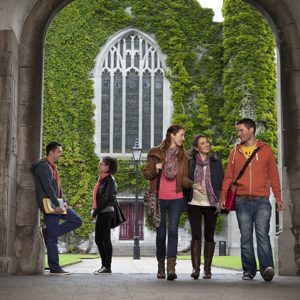
Tá roghnú cúrsa léinn ar cheann de na cinntí is tábhachtaí dá ndéanfaidh tú choíche! Féach na cúrsaí atá againn anseo agus an méid a deir mic léinn agus léachtóirí faoi na cúrsaí sin a bhfuil spéis agatsa iontu.
-
Saol na hOllscoile

Saol na hOllscoile
Chuile bhliain roghnaíonn os cionn 4,000 duine Ollscoil na Gaillimhe mar chéad rogha. Faigh amach faoin saol in Ollscoil na Gaillimhe anseo.
-
Eolas Fúinn
Eolas faoi Ollscoil na Gaillimhe
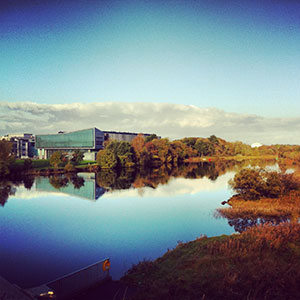
Bí ar an eolas faoin Ollscoil seo agus na fáthanna a bhfuil sí chomh speisialta sin – an stair thar a bheith spéisiúil a bhaineann leis an Ollscoil agus an nuacht is déanaí agus na hócáidí atá ar na bacáin.
-
Coláistí & Scoileanna
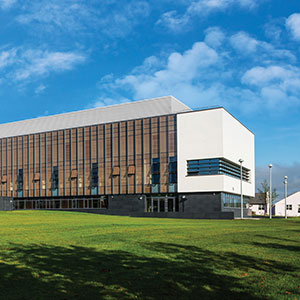
Coláistí & Scoileanna
Tá aitheantas idirnáisiúnta bainte amach ag Ollscoil na Gaillimhe mar ollscoil atá á treorú ag an taighde agus rún daingean aici teagasc den chéad scoth a chur ar fáil i réimsí éagsúla saineolais.
-
Taighde
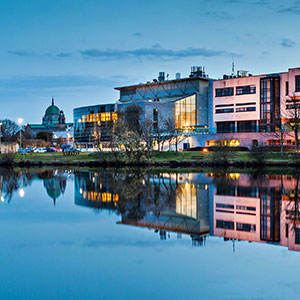
Nithe Fónta á gCruthú as Smaointe Úra
Tugann ár dtaighdeoirí aghaidh ar chuid de na dúshláin is práinní san 21ú Céad.
-
Gnó & Tionscal
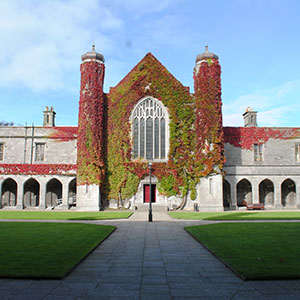
Tacaíocht do Thaighde Úrnua in Ollscoil na Gaillimhe
Déanaimid deiseanna tráchtála a chuardach agus a chothú don phobal taighde in Ollscoil na Gaillimhe, mar aon le comhpháirtíocht tionsclaíochta a chothú.
-
Alumni, Cairde & Lucht Tacaíochta
Alumni, Cairde & Lucht Tacaíochta
Tá os cionn 90,000 céimí de chuid Ollscoil na Gaillimhe ann ar fud an domhain. Déan nasc linn agus beidh teacht agat ar an gcomhphobal sin ar líne.
-
Rannpháirtíocht Pobail
Rannpháirtíocht sa Phobal
In Ollscoil na Gaillimhe, creidimid go n-éireoidh níos fearr leat más féidir leat an méid a fhoghlaimíonn tú a chur i bhfeidhm i do shaol féin. Is mar gheall air sin go bhfuil béim mhór ar shocrúcháin oibre nó ar thionscadail phobail i gcuid mhór dár gcúrsaí.








Nuacht
Wednesday,
25
March
2026
Invasive Noble false widow now among the most common spiders in Irish cities
Nationwide survey shows invasive spider thriving in urban centres The invasive Noble false widow spider (Steatoda nobilis) is now one of the most common urban spiders in Ireland, according to a new study by researchers at the University of Galway. Researchers surveyed urban spider populations across the Republic of Ireland to identify the most common species and the environmental factors influencing their diversity and abundance. The study found that the Noble false widow and the long-established missing sector orb weaver (Zygiella x-notata) accounted for more than 80% of urban spider populations. Remarkably, the Noble false widow is now well established even in counties such as Mayo and Sligo, where it was previously unrecorded. The findings, been published in Ecology and Evolution, highlight Ireland’s understudied urban habitats, as well as the potential negative impact of the Noble false widow on native spider species Brandon Collier, doctoral researcher at University of Galway and first author of the study, said: “This research provides a framework for studying a largely overlooked habitat for invasive and medically important species. As human populations increase year after year, urban areas grow with them. Understanding the impact this has on native species in Ireland provides essential knowledge for preventing and managing invasions in more fragile environments like Australia, New Zealand, and Japan.” Rapid global trade has allowed more spider species to spread beyond their native ranges to become cosmopolitan and, occasionally, invasive. False widows and their relatives, the black widows, have led this trend, with implications for human and environmental health. While the strong venom potency and medical importance of certain widow spiders is well documented, their ecological impact has been harder to determine. To better understand urban spider populations, researchers developed a visual survey framework that could be applied internationally to monitor invasive species. The scientists are calling for the Noble false widow spider to be officially recognised as an invasive species under the UN Convention on Biological Diversity’s guidelines because of its rapid spread and potential impact on native spiders. The research was carried out by established and postgraduate scientists from the University of Galway, with funding through the University’s Hardiman Scholarship held by Brandon Collier. Mr Collier added: “Now more than ever, we need to evaluate the threat of potentially invasive spider species and formulate a global action plan to prevent negative impacts on sensitive native species. Collaborating with international research groups has allowed us to begin the dialogue, but implementing policy changes in affected regions is essential to preventing future wide-spread invasions.” Dr Michel Dugon, Head of the Venom Systems Lab at University of Galway and senior author of the study, said: “The populations of Noble false widows have exploded throughout Western Europe in the past two decades, and the species has been recently observed in New Zealand, South America, the US, and North Africa. Our next step is to understand the physiological adaptations of the species to better predict other areas at risk of invasion.” Dayle Leonard, doctoral researcher at University of Galway and co-author of the study, said: “This research highlights a threat to biodiversity that is largely ignored. We were able to show how though Irish weather varies greatly, spider diversity is more affected by the seasons, food, and, potentially, the presence of the invasive Noble false widow spider. There are global implications with the spread of the Noble false widow across continents, so providing insight into its dominance and its impact in urban environments is vital.” The full study in Ecology and Evolution is available at https://doi.org/10.1002/ece3.73193. Ends
Wednesday,
25
March
2026
University of Galway Tax Clinic and Galway credit unions launch free tax support partnership
Tuesday,
24
March
2026
Pláinéad eile timpeall ar réalta óg aimsithe ag mac léinn réalteolaíochta
Tuesday,
24
March
2026
Astronomy student discovers second planet around young star
Friday, 16 December 2022
All eligible University of Galway full time and part time hourly payscales have been updated in line with the provisions of Building Momentum - A New Public Service Agreement 2021-22. Specifically the following increases have been implemented: - With effect from 02nd February 2022, payscales received a 3% increase - With effect from 01st October 2022- payscales received a further 1% increase or €500, whichever is greater We are still awaiting sanction for the implementation of FEMPI restoration wef 1st July 2022 (save for a limited number of pay scales). Therefore there are no changes to those grades\pensions for now. See paragraph 1.3 in the above link for more details. Further advice will be issued for these grades in due course.
Monday, 24 April 2023
We have been asked to bring to your attention the fact that Secondment Expression of Interest Notices has been issued for the Public Service Transformation Division of the Department of Public Expenditure, NDP Delivery and Reform. Expressions of interest are invited from across all sectors of the Public Service, including higher education, and across a number of grades. Notices are available directly at the following link, and DPENDR and DFHERIS would very much appreciate your support in circulating to your staff. The closing date for applications is 2nd May, and we understand the notices issued on Friday 14th April.